
Chain sprockets play an important role in the operation of conveyor systems and agricultural machinery. They help transfer mechanical power from one shaft to another through a chain, allowing different machine components to work together smoothly. From industrial production lines to tractors and harvesting equipment, sprockets are used in many applications where reliable power transmission is required.
Choosing the right chain sprocket is important for maintaining machine performance and avoiding unnecessary maintenance problems. A sprocket with the wrong dimensions, tooth profile, or material can cause improper chain engagement, excessive wear, vibration, and unexpected downtime. In this guide, Parkash Gears explains the important factors to consider when selecting chain sprockets for industrial conveyors and agricultural machinery.
What Is a Chain Sprocket?
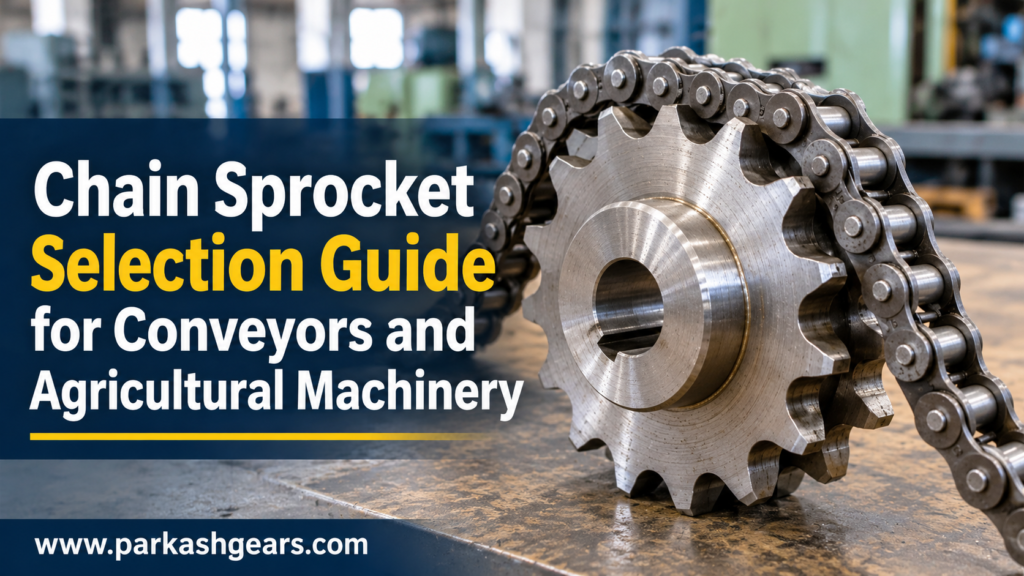
A chain sprocket is a toothed wheel designed to engage with a roller chain or another compatible chain system. As the sprocket rotates, its teeth engage with the chain links and transfer mechanical power between connected components. Unlike a friction-based drive system, a chain and sprocket arrangement provides positive engagement when the components are correctly matched and maintained.
Chain sprockets are available in different sizes, tooth counts, materials, and designs to suit different machinery requirements. Small sprockets are commonly used in compact mechanical systems, while larger and heavier sprockets are found in industrial conveyors and agricultural equipment. Selecting the correct sprocket helps maintain proper chain movement, improve transmission reliability, and support the overall performance of the machine.
How to Choose the Right Chain Sprocket
Selecting a suitable sprocket requires understanding how the machine operates and what type of load it handles. Before purchasing or manufacturing a sprocket, consider the following important factors.
1. Check the Chain Size and Pitch
Chain pitch is the distance between the centres of two adjacent chain pins. It is one of the most important measurements when selecting a sprocket because the sprocket teeth must match the chain dimensions. If the pitch does not match, the chain may not sit correctly on the sprocket, which can lead to improper engagement and faster component wear.
Before choosing a sprocket, check the chain manufacturer’s specifications and confirm the chain type and pitch. Also consider the roller diameter and other relevant chain dimensions. A correctly matched chain and sprocket combination helps maintain smooth movement and reduces unnecessary stress on the transmission system.
2. Select the Correct Number of Teeth
The number of teeth on a sprocket affects the speed relationship between the driving and driven shafts. A smaller driving sprocket connected to a larger driven sprocket generally reduces output speed while increasing available output torque, subject to system losses. Therefore, the tooth count should be selected according to the machine’s required speed and load.
When selecting sprockets for conveyors or agricultural machinery, consider the required operating speed, chain arrangement, and available installation space. The right tooth count helps achieve the intended transmission ratio and supports consistent machine operation.
3. Choose the Right Material
Material selection has a direct impact on sprocket strength, durability, and resistance to wear. Carbon steel and alloy steel are commonly considered for industrial sprocket manufacturing because they can provide suitable mechanical properties for different applications. The final choice depends on the expected load, operating speed, environment, and service requirements.
Agricultural machinery often works in dusty, muddy, and outdoor conditions, while industrial conveyor systems may operate for long hours under continuous loads. For these reasons, the sprocket material and any required surface treatment should be selected according to the working environment. Suitable material selection can help reduce premature wear and improve component service life.
4. Consider Load and Operating Conditions
Not every sprocket is designed to handle the same working conditions. Conveyor systems may carry heavy materials continuously, whereas agricultural machinery may experience changing loads during field operations. Factors such as shock loads, operating hours, chain speed, and frequency of use should be considered before choosing a sprocket.
It is also important to understand whether the machine operates continuously or only for a few hours each day. A sprocket used in demanding conditions may require a different material, design, or manufacturing specification compared with one used in a light-duty application. Matching the sprocket to the actual working conditions helps support reliable performance.
5. Check Dimensions and Manufacturing Quality
Correct dimensions are essential for proper sprocket installation and chain engagement. Important measurements include bore diameter, outside diameter, thickness, tooth profile, keyway dimensions, and overall alignment requirements. Even a small dimensional variation can affect how the sprocket fits onto the shaft or engages with the chain.
Manufacturing quality is equally important because poorly finished teeth or inaccurate dimensions may contribute to noise, vibration, and uneven wear. Before finalising a sprocket, check the technical drawing and required tolerances. Proper inspection during manufacturing helps ensure that the finished component meets the intended application requirements.
Applications of Chain Sprockets
Chain sprockets are used in many industries because they provide a practical method of transferring mechanical power through chain-driven systems. Their design can be adapted to different machine sizes, operating speeds, and load requirements.
Common applications include:
- Industrial conveyor systems: Sprockets help move chains and transport materials through manufacturing, packaging, and material handling operations.
- Agricultural machinery: Tractors, harvesters, seed drills, and other farm equipment use sprockets in different chain-driven mechanisms.
- Food processing machinery: Compatible sprocket and chain systems are used in selected processing and conveying equipment.
- Manufacturing equipment: Production machinery uses sprockets to transfer motion between connected mechanical components.
- Material handling systems: Sprockets help operate chain conveyors used for moving goods and industrial materials.
- Power transmission systems: Chain sprockets connect rotating shafts and help transfer mechanical power in various industrial applications.
Each application has its own requirements, so sprocket dimensions, materials, tooth profiles, and chain compatibility should be checked before selection.
Chain Sprocket Manufacturing in Ludhiana
Ludhiana is an important industrial and engineering centre in Punjab, with businesses involved in agricultural equipment, automotive components, machinery, and manufacturing. These industries depend on properly designed gears and sprockets to keep their machines operating efficiently. As a result, choosing the right manufacturing partner is an important part of maintaining product quality and dependable machinery performance.
Parkash Gears is an industrial gear manufacturing brand based in Ludhiana, Punjab. The company manufactures different types of gears and transmission components for automotive, agricultural, and industrial applications. Businesses searching for Gears Manufacturers in Ludhiana can discuss their requirements with Parkash Gears and share technical drawings, dimensions, material preferences, and application details to determine suitable manufacturing solutions.
Frequently Asked Questions (FAQs)
1. How do I choose the right chain sprocket for a conveyor?
Check the chain pitch, tooth count, load capacity, operating speed, and sprocket dimensions.
2. Which sprocket is best for agricultural machinery?
Choose a sprocket that matches the machine’s chain type, load requirements, and working conditions.
3. Which material is used for industrial chain sprockets?
Carbon steel and alloy steel are commonly used for industrial sprockets.
4. Why is sprocket tooth count important?
Tooth count affects the transmission ratio, output speed, and torque of the machine.
5. How can I increase chain sprocket life?
Maintain proper chain tension, alignment, and lubrication. Replace worn components when necessary.
6. What is the difference between industrial and agricultural sprockets?
Industrial sprockets are used in conveyors and machinery, while agricultural sprockets are designed for farm equipment.
7. Can chain sprockets be custom-made?
Yes, sprockets can be manufactured according to required dimensions, materials, and technical drawings.
8. Where can I find Gears Manufacturers in Ludhiana?
Contact +91-9915280866 Parkash Gears in Ludhiana to discuss your industrial gear and sprocket requirements.