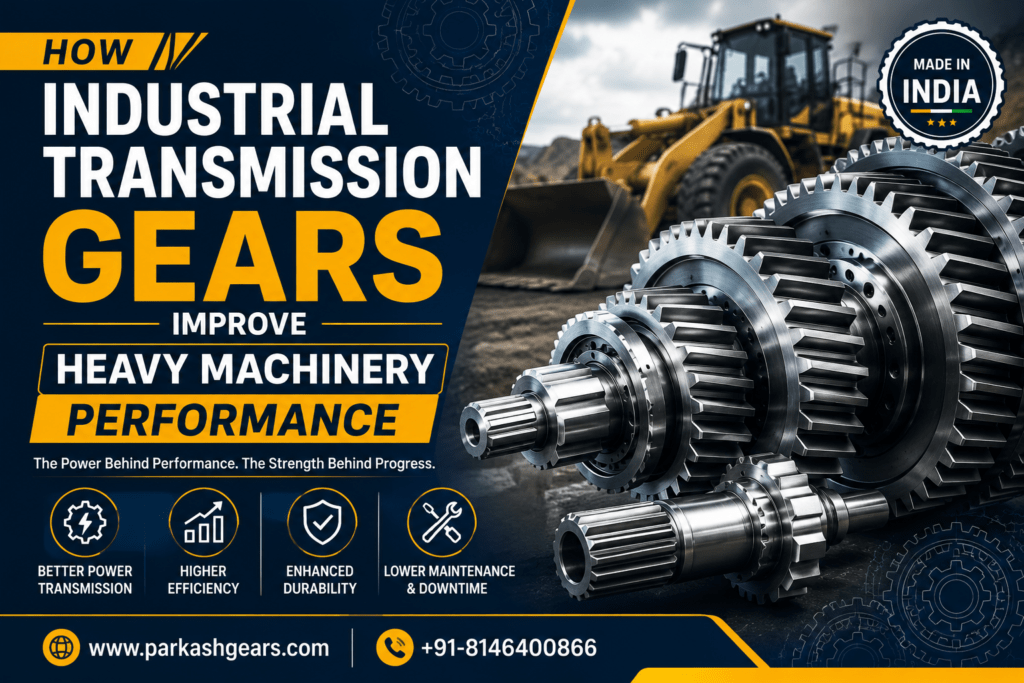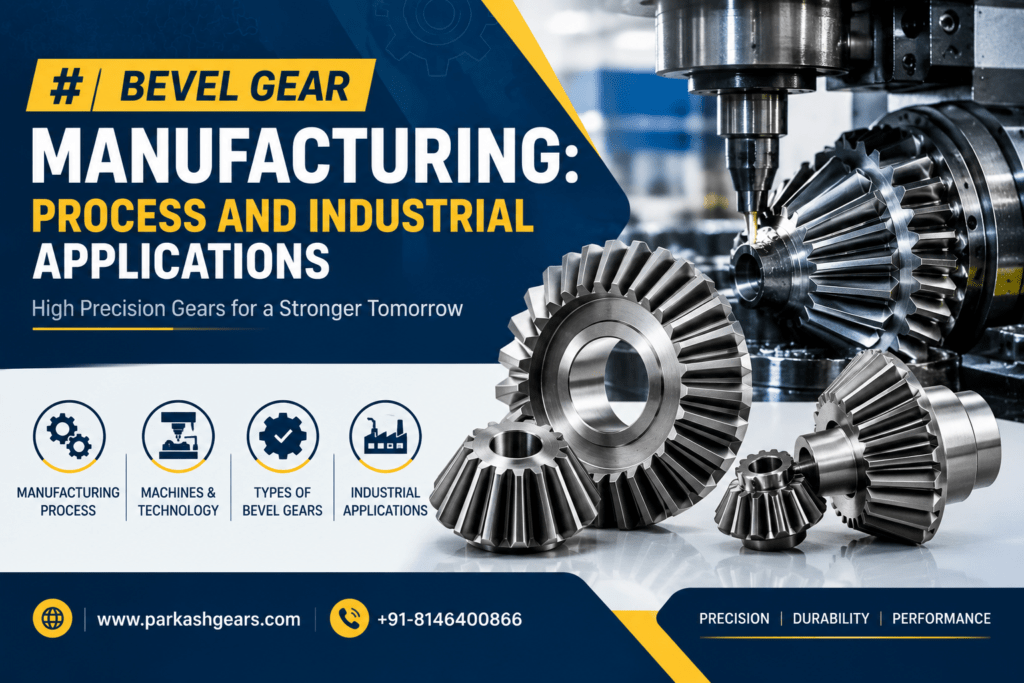

Industrial gears are essential components used in machines and mechanical systems to transmit power, control speed, increase or reduce torque, and transfer rotational movement between shafts. From automotive and agricultural machinery to heavy industrial equipment, gears play an important role in the efficient operation of modern mechanical systems.
With the growth of India’s engineering and manufacturing industries, the demand for reliable and precision-engineered gears continues to increase. Choosing the right gear manufacturer is important because gear quality, material selection, tooth accuracy, manufacturing methods, and inspection can directly affect the performance and service life of machinery.
In this guide, we will explain gear manufacturing, different types of industrial gears, their applications, the manufacturing process, and important factors to consider when selecting a gear manufacturer in India.
What Is Gear Manufacturing?
Gear manufacturing is the process of designing, producing, machining, finishing, and inspecting gears according to specific engineering requirements.
A gear is a mechanical component with teeth that engage with another gear or toothed component to transmit rotational movement and mechanical power. Different gear designs are used depending on the direction of power transmission, required speed, torque, load, and operating conditions.
The gear manufacturing process can involve several stages, including:
- Gear design and engineering
- Material selection
- Gear blank preparation
- Gear cutting
- Heat treatment
- Machining and finishing
- Dimensional inspection
- Quality control
The exact manufacturing process depends on the type, size, material, accuracy, and application of the gear.
Why Is Gear Manufacturing Important?
Gears are used in a wide range of machines because they provide controlled and efficient power transmission.
A properly designed and manufactured gear can help a machine:
- Transfer mechanical power
- Control rotational speed
- Increase or reduce torque
- Change the direction of rotation
- Maintain controlled movement
- Operate efficiently
- Handle specific load requirements
Even small variations in gear dimensions or tooth geometry can affect the way two gears engage. For this reason, precision is an important consideration in industrial gear manufacturing.
Types of Industrial Gears
Different machines require different types of gears. Gear selection depends on factors such as shaft arrangement, speed, torque, gear ratio, load, space limitations, and operating environment.
Some commonly used industrial gears include the following.
1. Spur Gear
Spur gears are one of the most commonly used types of industrial gears. They have straight teeth positioned parallel to the gear axis and are generally used to transmit power between parallel shafts.
Their relatively simple design makes them suitable for many mechanical and industrial applications. Spur gears can be manufactured in different sizes, materials, tooth configurations, and specifications according to the requirements of the machine.
Applications of Spur Gears
Spur gears can be used in:
- Industrial machinery
- Gearboxes
- Agricultural equipment
- Automotive systems
- Conveyors
- Manufacturing equipment
- Power transmission systems
For reliable performance, spur gear manufacturing requires accurate tooth dimensions, proper machining, suitable materials, and appropriate quality inspection.
2. Helical Gear
Helical gears have teeth that are positioned at an angle to the gear axis. The angled teeth engage progressively, which can provide smooth power transmission and controlled operation.
Helical gears are widely used in industrial applications where smooth operation and reliable power transmission are required. Their design makes them suitable for various speed and load conditions when properly engineered.
Applications of Helical Gears
Common applications include:
- Industrial gearboxes
- Manufacturing machinery
- Automotive equipment
- Conveyor systems
- Agricultural machinery
- Power transmission equipment
- Heavy industrial machinery
The manufacturing of helical gears requires careful control of tooth geometry, dimensions, alignment, and finishing.
3. Ring Gear
A ring gear is a large circular gear with teeth arranged around its circumference. Depending on the design, the teeth may be located on the inner or outer surface of the ring.
Ring gears are used in different mechanical systems where controlled rotational movement and power transmission are required.
Applications of Ring Gears
Ring gears may be used in:
- Automotive systems
- Heavy machinery
- Industrial gearboxes
- Construction equipment
- Power transmission systems
- Specialized mechanical assemblies
Because ring gears can be large and application-specific, manufacturing accuracy and dimensional control are important during production.
4. Worm Gear
Worm gears generally consist of a worm and a worm wheel. They are commonly used for speed reduction and power transmission between shafts positioned at an angle.
One of the major reasons for using worm gear systems is their ability to achieve significant speed reduction in a relatively compact arrangement.
Applications of Worm Gears
Worm gears are commonly used in:
- Conveyors
- Lifting equipment
- Industrial machinery
- Material handling systems
- Positioning equipment
- Speed reduction systems
- Mechanical drives
The design and manufacturing requirements of a worm gear depend on the required reduction ratio, operating speed, load, lubrication, and application.
5. Crown Bevel Gears
Crown bevel gears are a type of bevel gear used to transmit motion and power between intersecting shafts. Their geometry allows a mechanical system to change the direction of rotational power.
They can be used in different industrial and mechanical applications depending on the required shaft arrangement and operating conditions.
Applications of Crown Bevel Gears
Crown bevel gears may be used in:
- Industrial machinery
- Agricultural equipment
- Power transmission systems
- Mechanical drives
- Specialized gear assemblies
- Engineering equipment
Accurate tooth geometry and proper alignment are important when manufacturing crown bevel gears to ensure suitable engagement with the mating gear.
6. Shaft Pinion
A shaft pinion is a pinion gear that is integrated with or mounted on a shaft. A pinion is generally the smaller gear in a gear pair and works with a larger gear to transmit rotational movement and mechanical power.
Shaft pinions are used where specific shaft and gear dimensions are required for a particular mechanical system.
Applications of Shaft Pinions
Shaft pinions are commonly used in:
- Industrial gearboxes
- Heavy machinery
- Automotive equipment
- Manufacturing machinery
- Power transmission systems
- Specialized industrial equipment
Manufacturing a shaft pinion requires accurate control of both the gear teeth and shaft dimensions. Tooth profile, concentricity, hardness, surface finish, and dimensional accuracy may all be important depending on the application.
7. Double Helical Gear
Double helical gears feature two sets of helical teeth arranged in opposite directions. They are generally used in demanding applications where high power transmission and heavy-load operation are required.
The double helical arrangement is designed to help manage the axial forces associated with helical gear operation while providing a suitable configuration for heavy-duty applications.
Applications of Double Helical Gears
Double helical gears can be used in:
- Heavy-duty gearboxes
- Industrial drives
- Large machinery
- Power transmission equipment
- Steel and metal processing machinery
- Heavy engineering applications
The manufacturing of double helical gears requires precise control over tooth geometry, alignment, dimensions, machining, and finishing.
8. Straight Bevel Gear
Straight bevel gears have straight teeth arranged on a conical gear surface. They are used to transmit power between intersecting shafts and can change the direction of rotational movement.
They are commonly used in mechanical systems where the shafts need to meet at an angle, often at approximately 90 degrees.
Applications of Straight Bevel Gears
Straight bevel gears can be used in:
- Industrial machinery
- Agricultural equipment
- Automotive applications
- Machine tools
- Mechanical drives
- Power transmission systems
Proper tooth cutting, material selection, dimensions, and inspection are important during straight bevel gear manufacturing.
9. Oil Expeller Gear
Oil expeller gears are specialized gears used in oil expeller machinery and oil extraction equipment. These machines are commonly used for processing oil-bearing seeds and agricultural materials.
The gears used in oil expeller machines help transmit mechanical power through different parts of the equipment during operation.
Applications of Oil Expeller Gears
Oil expeller gears are used in equipment associated with:
- Oilseed processing
- Oil extraction machinery
- Agricultural processing
- Food processing equipment
- Industrial oil mills
Because oil expeller machines may operate continuously and under demanding conditions, the gears need to be manufactured according to the machine’s required specifications, load, speed, dimensions, and operating conditions.
Applications of Industrial Gears
Industrial gears are used across many industries because machines require controlled transmission of mechanical power.
Automotive Industry
Gears are fundamental components in many automotive systems. They are used in transmission systems, differentials, power transmission assemblies, and other mechanical applications.
Automotive gear manufacturing requires attention to dimensional accuracy, tooth geometry, material properties, and surface quality.
Agricultural Machinery
Agricultural machinery operates under different loads and environmental conditions. Gears are used in tractors, agricultural equipment, harvesting machinery, pumps, and other farm-related machines.
Spur gears, helical gears, bevel gears, sprockets, and other gear components may be used depending on the equipment design.
Industrial Machinery
Industrial production equipment relies on gears for controlled movement and power transmission. Gears can be found in:
- Gearboxes
- Conveyors
- Processing machinery
- Machine tools
- Material handling systems
- Production equipment
The correct gear design can contribute to reliable machine operation and efficient power transmission.
Heavy Engineering
Heavy engineering equipment often requires components capable of handling significant loads and demanding operating conditions.
Double helical gears, helical gears, bevel gears, pinions, and other industrial gear components can be used in heavy-duty machinery and power transmission systems.
Oil Extraction and Processing
Oil extraction machinery uses specialized mechanical systems to process oil-bearing seeds. Oil expeller gears form an important part of the power transmission system within this equipment.
The gear specifications depend on the machine design and operating requirements.
Material Handling
Conveyors, lifting equipment, and material handling machinery frequently use gear systems to control movement and transmit mechanical power.
Worm gears, helical gears, spur gears, and other gear types may be selected depending on the required speed, load, and machine configuration.
Industrial Gear Manufacturing Process
The manufacturing process varies according to gear type, size, material, design, and application. However, a typical process may include several important stages.
1. Gear Design and Engineering
The first step is understanding the technical requirements of the gear.
Important design factors may include:
- Gear type
- Number of teeth
- Module or pitch
- Pressure angle
- Gear ratio
- Face width
- Gear diameter
- Material
- Required hardness
- Operating speed
- Load capacity
A detailed engineering approach helps determine the appropriate manufacturing method.
2. Material Selection
Material selection plays an important role in gear manufacturing.
Depending on the application, gears may be manufactured using suitable grades of steel, alloy steel, cast iron, or other engineering materials.
The material should be selected according to factors such as:
- Load
- Speed
- Wear
- Impact
- Operating environment
- Required strength
- Expected service life
3. Gear Blank Preparation
Before gear teeth are produced, the basic gear blank must be prepared according to the required dimensions.
Depending on the gear and production requirements, blanks may be produced through suitable processes such as forging, casting, or machining.
4. Gear Cutting
Gear cutting is one of the most important stages in gear manufacturing.
Depending on the type of gear, manufacturers may use processes such as:
- Hobbing
- Shaping
- Milling
- Broaching
- Specialized gear cutting methods
The selected method depends on the gear design, material, production volume, and required accuracy.
5. Heat Treatment
Heat treatment may be used to achieve specific material properties required for the application.
Depending on the material and design, heat treatment can help achieve suitable hardness, strength, wear resistance, and durability.
The appropriate process should be selected based on the gear’s technical requirements.
6. Gear Finishing
After gear cutting and heat treatment, additional machining or finishing may be required.
Finishing operations can help achieve the required dimensions, surface quality, and gear accuracy.
Depending on the gear, finishing may involve grinding or other precision machining processes.
7. Quality Inspection
Quality inspection is an important part of industrial gear manufacturing.
Depending on the application, manufacturers may inspect:
- Gear dimensions
- Tooth profile
- Tooth thickness
- Runout
- Concentricity
- Surface finish
- Hardness
- Alignment
- Overall dimensional accuracy
Proper inspection helps ensure that the manufactured gear meets its specified requirements.
Factors to Consider When Choosing a Gear Manufacturer in India
Selecting a suitable gear manufacturer is important for businesses that require reliable components for industrial machinery.
Manufacturing Experience
An experienced manufacturer can have knowledge of different gear types, materials, machining processes, and industrial applications.
Experience can be particularly useful when manufacturing custom or application-specific gears.
Product Range
A manufacturer offering multiple types of gears can be beneficial when a customer needs different components for the same machine or project.
A broad product range may include spur gears, helical gears, ring gears, worm gears, bevel gears, pinions, double helical gears, and specialized gears.
Manufacturing Capabilities
Before selecting a manufacturer, consider whether the company has suitable equipment and capabilities for the required gear.
Depending on the project, this may include:
- Gear cutting
- CNC machining
- Heat treatment
- Gear finishing
- Dimensional inspection
- Quality testing
Quality Control
Consistent quality is important because variations in gear dimensions and tooth geometry can affect gear engagement and machine performance.
A reliable manufacturer should have appropriate inspection and quality control procedures.
Custom Gear Manufacturing
Not every machine uses a standard gear. Some applications require gears manufactured according to specific drawings, dimensions, materials, tooth profiles, or operating conditions.
Custom gear manufacturing can be suitable for:
- Replacement gears
- Special machinery
- Industrial equipment
- Agricultural machinery
- Automotive components
- Specialized power transmission systems
When requesting a custom gear, providing complete technical drawings and specifications can help the manufacturer understand the exact requirements.
Gear Manufacturing in India
India has a large engineering and manufacturing sector serving industries such as automotive, agriculture, heavy engineering, industrial machinery, power transmission, and material handling.
As industrial equipment continues to develop, manufacturers increasingly require gears that meet specific performance and dimensional requirements.
A reliable gear manufacturer in India should be able to understand the application, recommend appropriate manufacturing processes, and produce gears according to the required specifications.
When comparing gear manufacturers, businesses should consider manufacturing experience, product range, technical capabilities, quality control, customization options, delivery requirements, and application expertise.
Gear Manufacturing in Ludhiana, Punjab
Ludhiana is an important industrial and engineering hub in Punjab. The city has a strong manufacturing ecosystem serving automotive, agricultural, engineering, and industrial sectors.
For businesses looking for an industrial gear manufacturer in Ludhiana, choosing a manufacturer with experience in different gear types and applications can be beneficial.
Parkash Gears is a gear manufacturing company based in Ludhiana, Punjab, with experience in manufacturing gears and related components for different industrial requirements.
The company’s product range includes:
- Spur Gears
- Helical Gears
- Ring Gears
- Worm Gears
- Crown Bevel Gears
- Shaft Pinions
- Double Helical Gears
- Straight Bevel Gears
- Oil Expeller Gears
Why Choose Parkash Gears?
Parkash Gears has been involved in gear manufacturing since 1952 and serves customers requiring industrial and application-specific gear components.
With experience across different gear types, the company focuses on manufacturing gears according to the technical requirements of different machines and industries.
Whether you need spur gears, helical gears, ring gears, worm gears, bevel gears, shaft pinions, double helical gears, or oil expeller gears, the right gear specification should always be determined according to the machine’s operating requirements.
For custom requirements, customers can provide technical drawings, dimensions, material specifications, or other relevant information so that the appropriate manufacturing approach can be considered.
How to Choose the Right Industrial Gear?
Choosing an industrial gear should start with understanding the machine and its operating requirements.
Consider the following factors:
1. Shaft Arrangement
Determine whether the shafts are parallel, intersecting, or positioned at an angle. This helps narrow down the appropriate gear type.
2. Speed
The operating speed of the machine is an important factor in gear selection and design.
3. Torque and Load
The gear should be suitable for the torque and load that it will experience during operation.
4. Gear Ratio
The required speed reduction or increase should be considered when selecting the gear arrangement.
5. Material
Material selection should match the application’s strength, wear, impact, and environmental requirements.
6. Operating Environment
Temperature, dust, moisture, lubrication, continuous operation, and other environmental conditions can affect gear selection.
7. Accuracy Requirements
Applications requiring precise movement or demanding operating conditions may require higher levels of manufacturing and inspection accuracy.
Benefits of Working With an Experienced Gear Manufacturer
Working with an experienced manufacturer can provide several advantages when sourcing industrial gears.
Application Understanding
An experienced manufacturer can better understand the relationship between gear design and the machine in which it will be used.
Consistent Manufacturing
Established manufacturing processes and quality checks can help maintain consistency between components.
Customization
Manufacturers with suitable engineering and production capabilities can produce gears according to specific customer requirements.
Technical Support
Discussing the application, drawing, material, and operating conditions with the manufacturer can help identify suitable manufacturing requirements.
Frequently Asked Questions About Gear Manufacturing
What is gear manufacturing?
Gear manufacturing is the process of designing, machining, finishing, and inspecting gears used to transmit mechanical power and rotational movement in machinery.
What are the main types of industrial gears?
Common industrial gears include spur gears, helical gears, ring gears, worm gears, crown bevel gears, shaft pinions, double helical gears, straight bevel gears, and specialized gears such as oil expeller gears.
What industries use industrial gears?
Industrial gears are used in automotive, agricultural, manufacturing, heavy engineering, oil processing, material handling, power transmission, and many other industries.
Can gears be custom manufactured?
Yes. Gears can be manufactured according to specific drawings, dimensions, materials, tooth profiles, hardness requirements, and application specifications.
How do I choose the right gear?
The right gear depends on shaft arrangement, speed, torque, load, gear ratio, operating environment, material, space, and required accuracy.
What should I provide when ordering a custom gear?
Useful information can include a technical drawing, gear dimensions, number of teeth, module or pitch, pressure angle, material, hardness requirements, shaft dimensions, operating speed, and load requirements.
Why is precision important in gear manufacturing?
Precision is important because gear teeth must engage correctly with their mating components. Manufacturing variations can affect noise, vibration, wear, heat generation, and overall machine performance.
Where can I find a gear manufacturer in India?
India has many manufacturers serving different industries. When selecting a manufacturer, consider experience, product range, manufacturing capabilities, quality control, customization, and ability to meet your technical requirements.
Conclusion
Gear manufacturing is an important part of India’s engineering and industrial sector. From simple spur gears to specialized oil expeller gears, different gear designs are used to solve different power transmission and motion requirements.
Understanding the differences between spur gears, helical gears, ring gears, worm gears, crown bevel gears, shaft pinions, double helical gears, straight bevel gears, and oil expeller gears can help businesses make more informed decisions when selecting components for their machinery.
The quality of the final gear depends on several factors, including design, material selection, gear cutting, heat treatment, finishing, dimensional accuracy, and inspection. For this reason, choosing an experienced gear manufacturer is an important part of any industrial gear sourcing process.
Parkash Gears provides a range of industrial gear manufacturing solutions from Ludhiana, Punjab, serving different automotive, agricultural, and industrial applications. Businesses looking for standard or application-specific gears can discuss their requirements with the manufacturer and determine a suitable manufacturing solution.